Placenta Capsules: Benefits and Risks,
Placenta encapsulation has become a popular option in postpartum care for many new mothers seeking natural support after birth. The practice of turning the placenta into placenta capsules (also called placenta pills) and consuming them is known as placentophagy or placenta ingestion. Supporters claim it aids postpartum recovery, while major medical organizations raise serious safety concerns.
This guide covers what placenta capsules are, the anecdotal benefits, documented risks, the typical preparation process, and what sources like the CDC, Mayo Clinic, Cleveland Clinic, and American Pregnancy Association say.
What Is Placenta Encapsulation and Placentophagy?
The placenta is the temporary organ that nourishes the developing baby during pregnancy. It delivers oxygen and nutrients through the umbilical cord and acts as a toxic waste filter, removing waste products from the baby’s blood.
After birth, some postpartum parents choose to consume their placenta. The most common modern method is placenta encapsulation: the placenta is cleaned, steamed or left raw, dehydrated, ground into powder, and placed into capsules (often size 00). These placenta capsules are then taken like supplements in the weeks or months after delivery.
Midwives and specialized services sometimes offer this as part of postpartum parent care. Additional keepsakes, such as an umbilical cord keepsake or placenta print, may also be created.
Claimed Benefits of Placenta Capsules
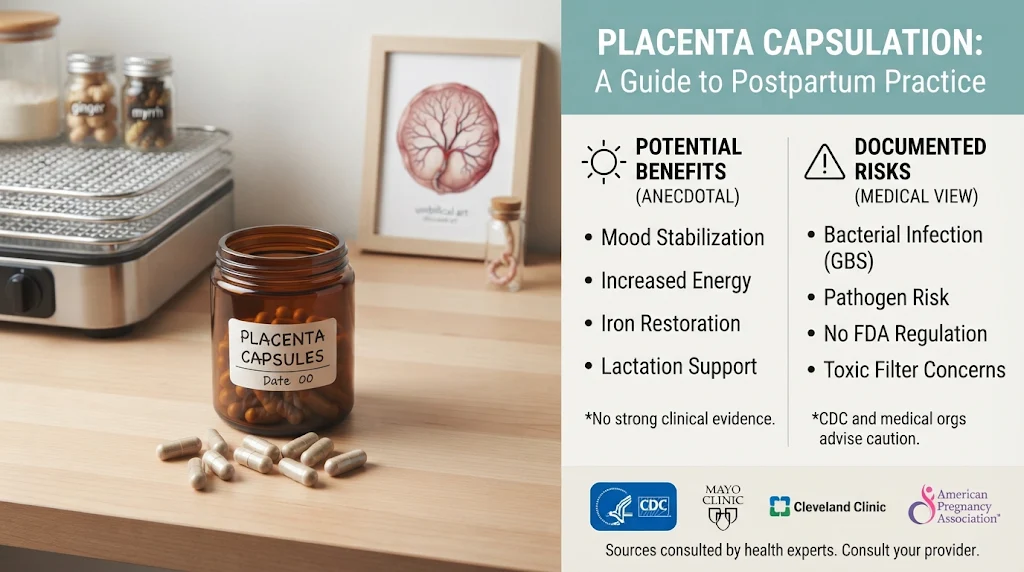
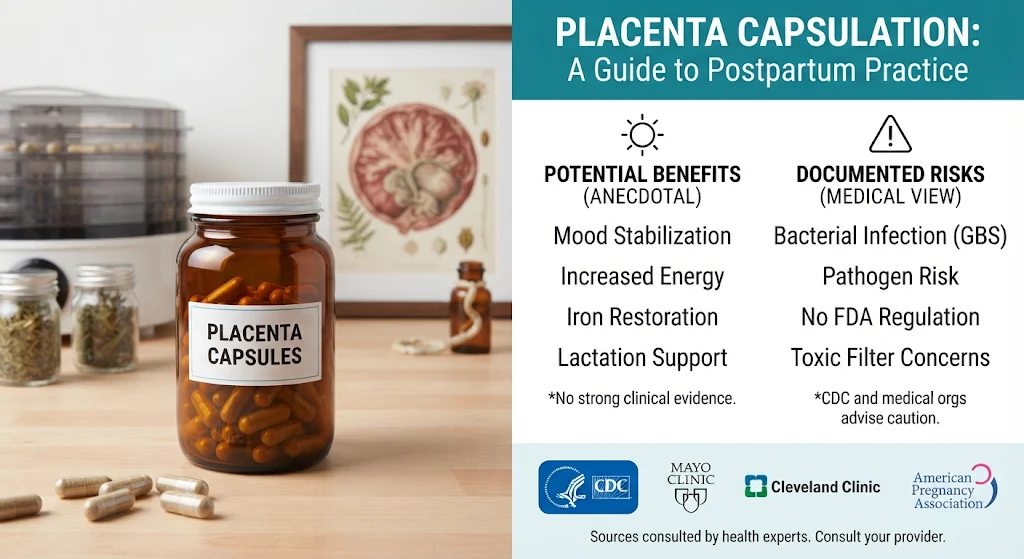
Many of the reported benefits of placenta encapsulation come from anecdotal experiences rather than strong clinical evidence. Common claims include:
- Mood stabilization and reduced postpartum depression risk Some believe residual hormones such as progesterone, estrogen, estradiol, and oxytocin help regulate postpartum hormonal fluctuations and support emotional balance.
- Increased energy levels Users often report less fatigue and a boost in energy during the demanding early postpartum period.
- Iron restoration and blood loss recovery The placenta contains iron, and some claim it helps replenish levels after birth-related blood loss.
- Lactation support and increased breast milk supply Advocates suggest it may enhance milk production.
- Hormone regulation and stress reduction Possible effects on oxytocin and stress hormones are frequently mentioned.
- Overall postpartum recovery and health Improved healing, reduced pain, and better general well-being are also cited.
Nutrients such as Vitamin B6 and Vitamin B12 are sometimes highlighted as well. However, research reviews (including those published in major obstetrics journals) have found no reliable scientific evidence that placenta capsules deliver meaningful amounts of these hormones or nutrients after processing, or that they produce measurable clinical benefits for mood, iron status, energy, or lactation.
Risks, Side Effects, and Safety Concerns
Medical experts emphasize that the risks of placenta consumption often outweigh any unproven benefits. Key concerns include:
Bacterial infection and pathogens
The placenta can harbor bacteria such as Group B Streptococcus (GBS), E. coli, Salmonella, Streptococcus, and Staphylococcus. Inadequate sterilization or contamination during handling can allow these pathogens to survive.
In 2016–2017, the Centers for Disease Control and Prevention (CDC) reported a case of late onset GBS infection in a newborn linked to the mother’s consumption of contaminated placenta capsules. The CDC stated that the placenta encapsulation process does not reliably eradicate infectious pathogens and recommended avoiding placenta capsule ingestion.
This risk affects both the postpartum parent and the breastfeeding infant, as bacteria can be transferred.
Other safety issues
- The placenta functions as a toxic waste filter during pregnancy and may retain heavy metals or other substances.
- Some users report reduced or decreased milk supply, possibly due to residual progesterone that can interfere with lactation.
- Side effects such as jitteriness, anxiety, or an over-caffeinated feeling have been noted, potentially linked to hormonal imbalances.
- There is no standardized, regulated preparation process. The industry is largely unregulated by the FDA.
Organizations including the Mayo Clinic and Cleveland Clinic advise against placenta encapsulation due to these infection risks and the lack of proven benefits. The American Pregnancy Association notes that most information remains anecdotal.
How Placenta Encapsulation Is Typically Done
A common preparation method (often inspired by Traditional Chinese Medicine approaches) includes these steps:
- Thorough cleaning of the placenta (sometimes on a chux pad).
- Optional steaming with herbs such as ginger and myrrh for antimicrobial protection and traditional tonifying effects.
- Thin slicing of the tissue.
- Dehydrating in a food-grade dehydrator until fully dry and brittle.
- Grinding the dried placenta into a fine powder using a food processor.
- Filling size 00 capsules.
- Storage in a glass bottle, often at room temperature or in the refrigerator depending on the provider’s guidelines.
The umbilical cord is frequently set aside to create a keepsake. Processing usually takes 1–3 days. Proper hygiene, refrigeration of the fresh placenta, and controlled temperatures are critical to reduce (but not eliminate) contamination risk.
Pros and Cons of Placenta Encapsulation
| Aspect | Potential Pros (Mostly Anecdotal) | Documented Cons / Risks |
|---|---|---|
| Mood & Hormones | Possible mood stabilization, oxytocin boost | No proven effect; possible hormonal imbalances |
| Energy & Recovery | Reported energy improvement, postpartum recovery | Unproven; infection risk |
| Iron & Nutrients | Claimed iron restoration | Insufficient retained nutrients after processing |
| Lactation | Possible milk supply increase | Risk of decreased milk supply |
| Safety | Natural option for some parents | Bacterial infection (GBS, pathogens), CDC warning |
How to Take Placenta Capsules (Dosage and Timing)
Providers typically suggest starting with 1–2 capsules 2–3 times daily in the early postpartum period, then tapering as needed. Exact dosage and timing vary and should be discussed with a healthcare provider. Capsules are usually stored in a cool, dry place or the refrigerator and discarded if they change in smell, color, or appearance.
The Bottom Line on Placenta Capsules
Placenta encapsulation remains a personal choice for some postpartum parents exploring midwifery services and natural recovery options. However, major medical sources—including the CDC, Mayo Clinic, and Cleveland Clinic—highlight the absence of proven benefits and the real risk of bacterial infection from pathogens that the encapsulation process may not fully eliminate.
If you are considering placenta pills, discuss the pros and cons thoroughly with your doctor, midwife, or healthcare team. Focus first on evidence-based postpartum care strategies for mood support, iron levels, lactation, and overall recovery. Informed decisions protect both the parent and the developing baby’s health after birth.
Always prioritize safety and consult qualified medical professionals before pursuing any form of placenta consumption.
Placenta encapsulation has become a popular option in postpartum care for many new mothers seeking natural support after birth. The practice of turning the placenta into placenta capsules (also called placenta pills) and consuming them is known as placentophagy or placenta ingestion. Supporters claim it aids postpartum recovery, while major medical organizations raise serious safety concerns.
This guide covers what placenta capsules are, the anecdotal benefits, documented risks, the typical preparation process, and what sources like the CDC, Mayo Clinic, Cleveland Clinic, and American Pregnancy Association say.
What Is Placenta Encapsulation and Placentophagy?
The placenta is the temporary organ that nourishes the developing baby during pregnancy. It delivers oxygen and nutrients through the umbilical cord and acts as a toxic waste filter, removing waste products from the baby’s blood.
After birth, some postpartum parents choose to consume their placenta. The most common modern method is placenta encapsulation: the placenta is cleaned, steamed or left raw, dehydrated, ground into powder, and placed into capsules (often size 00). These placenta capsules are then taken like supplements in the weeks or months after delivery.
Midwives and specialized services sometimes offer this as part of postpartum parent care. Additional keepsakes, such as an umbilical cord keepsake or placenta print, may also be created.
Claimed Benefits of Placenta Capsules
Many of the reported benefits of placenta encapsulation come from anecdotal experiences rather than strong clinical evidence. Common claims include:
- Mood stabilization and reduced postpartum depression risk Some believe residual hormones such as progesterone, estrogen, estradiol, and oxytocin help regulate postpartum hormonal fluctuations and support emotional balance.
- Increased energy levels Users often report less fatigue and a boost in energy during the demanding early postpartum period.
- Iron restoration and blood loss recovery The placenta contains iron, and some claim it helps replenish levels after birth-related blood loss.
- Lactation support and increased breast milk supply Advocates suggest it may enhance milk production.
- Hormone regulation and stress reduction Possible effects on oxytocin and stress hormones are frequently mentioned.
- Overall postpartum recovery and health Improved healing, reduced pain, and better general well-being are also cited.
Nutrients such as Vitamin B6 and Vitamin B12 are sometimes highlighted as well. However, research reviews (including those published in major obstetrics journals) have found no reliable scientific evidence that placenta capsules deliver meaningful amounts of these hormones or nutrients after processing, or that they produce measurable clinical benefits for mood, iron status, energy, or lactation.
Risks, Side Effects, and Safety Concerns
Medical experts emphasize that the risks of placenta consumption often outweigh any unproven benefits. Key concerns include:
Bacterial infection and pathogens
The placenta can harbor bacteria such as Group B Streptococcus (GBS), E. coli, Salmonella, Streptococcus, and Staphylococcus. Inadequate sterilization or contamination during handling can allow these pathogens to survive.
In 2016–2017, the Centers for Disease Control and Prevention (CDC) reported a case of late onset GBS infection in a newborn linked to the mother’s consumption of contaminated placenta capsules. The CDC stated that the placenta encapsulation process does not reliably eradicate infectious pathogens and recommended avoiding placenta capsule ingestion.
This risk affects both the postpartum parent and the breastfeeding infant, as bacteria can be transferred.
Other safety issues
- The placenta functions as a toxic waste filter during pregnancy and may retain heavy metals or other substances.
- Some users report reduced or decreased milk supply, possibly due to residual progesterone that can interfere with lactation.
- Side effects such as jitteriness, anxiety, or an over-caffeinated feeling have been noted, potentially linked to hormonal imbalances.
- There is no standardized, regulated preparation process. The industry is largely unregulated by the FDA.
Organizations including the Mayo Clinic and Cleveland Clinic advise against placenta encapsulation due to these infection risks and the lack of proven benefits. The American Pregnancy Association notes that most information remains anecdotal.
How Placenta Encapsulation Is Typically Done
A common preparation method (often inspired by Traditional Chinese Medicine approaches) includes these steps:
- Thorough cleaning of the placenta (sometimes on a chux pad).
- Optional steaming with herbs such as ginger and myrrh for antimicrobial protection and traditional tonifying effects.
- Thin slicing of the tissue.
- Dehydrating in a food-grade dehydrator until fully dry and brittle.
- Grinding the dried placenta into a fine powder using a food processor.
- Filling size 00 capsules.
- Storage in a glass bottle, often at room temperature or in the refrigerator depending on the provider’s guidelines.
The umbilical cord is frequently set aside to create a keepsake. Processing usually takes 1–3 days. Proper hygiene, refrigeration of the fresh placenta, and controlled temperatures are critical to reduce (but not eliminate) contamination risk.
Pros and Cons of Placenta Encapsulation
| Aspect | Potential Pros (Mostly Anecdotal) | Documented Cons / Risks |
|---|---|---|
| Mood & Hormones | Possible mood stabilization, oxytocin boost | No proven effect; possible hormonal imbalances |
| Energy & Recovery | Reported energy improvement, postpartum recovery | Unproven; infection risk |
| Iron & Nutrients | Claimed iron restoration | Insufficient retained nutrients after processing |
| Lactation | Possible milk supply increase | Risk of decreased milk supply |
| Safety | Natural option for some parents | Bacterial infection (GBS, pathogens), CDC warning |
How to Take Placenta Capsules (Dosage and Timing)
Providers typically suggest starting with 1–2 capsules 2–3 times daily in the early postpartum period, then tapering as needed. Exact dosage and timing vary and should be discussed with a healthcare provider. Capsules are usually stored in a cool, dry place or the refrigerator and discarded if they change in smell, color, or appearance.
The Bottom Line on Placenta Capsules
Placenta encapsulation remains a personal choice for some postpartum parents exploring midwifery services and natural recovery options. However, major medical sources—including the CDC, Mayo Clinic, and Cleveland Clinic—highlight the absence of proven benefits and the real risk of bacterial infection from pathogens that the encapsulation process may not fully eliminate.
If you are considering placenta pills, discuss the pros and cons thoroughly with your doctor, midwife, or healthcare team. Focus first on evidence-based postpartum care strategies for mood support, iron levels, lactation, and overall recovery. Informed decisions protect both the parent and the developing baby’s health after birth.
Always prioritize safety and consult qualified medical professionals before pursuing any form of placenta consumption.