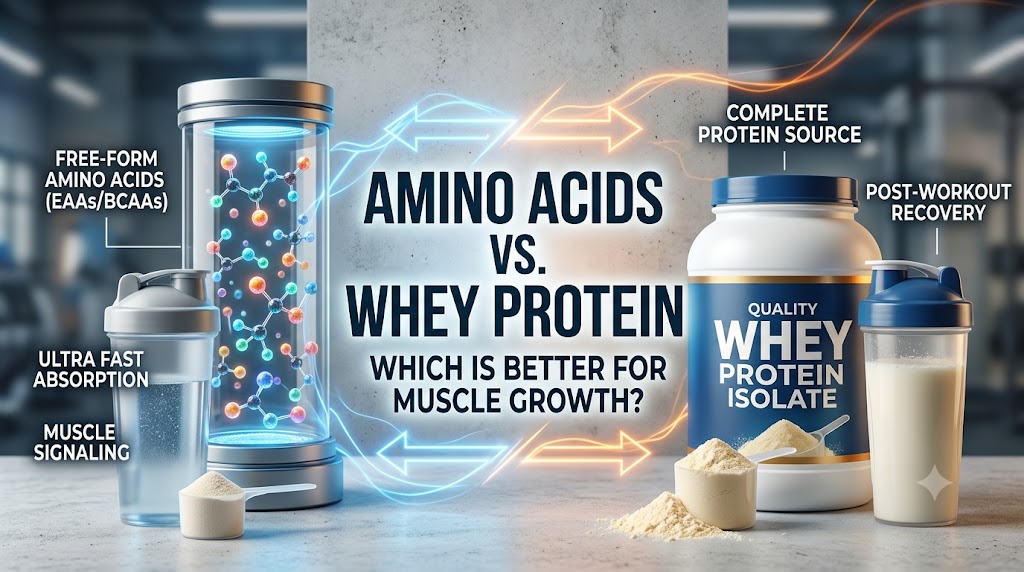
Amino Acids vs. Whey Protein: The Ultimate Guide to Muscle Growth, Recovery, and Metabolic Health
When trying to optimize your resistance training and hit your daily protein needs, choosing the right supplement can feel overwhelming. The market is flooded with options, leading to a classic debate among fitness enthusiasts and researchers alike: Amino Acids vs. Whey Protein Powder.
While both serve as the foundational building blocks for lean muscle development, they behave differently within the human body. This comprehensive, research-backed comparison will look at their nutritional structures, digestive rates, and practical applications to help you determine which option best fits your fitness goals.
Nutritional Architecture: The Structural Breakdown
To understand which is better for your goals, we must first examine what happens at the microscopic level.
Whey Protein: The Complete Protein Powerhouse
Whey protein is derived from milk during the cheesemaking process and is recognized as a complete protein because it naturally contains all nine essential amino acids (EAAs) that the human body cannot synthesize on its own. Depending on how it is processed, it generally falls into three categories:
- Whey Protein Concentrate: Contains beneficial immunoglobulins but retains higher levels of fats and lactose.
- Whey Protein Isolate: Undergoes advanced filtration to remove almost all fat and lactose, yielding a highly pure protein source (often 90%+ protein by weight).
- Whey Protein Hydrolysate: Pre-digested with enzymes for faster absorption, though it can sometimes carry a slightly bitter taste.
Amino Acids: The Isolated Building Blocks
Instead of a whole macromolecule, amino acid supplements provide free-form, isolated organic compounds. These products typically focus on either the nine EAAs or the three Branched-Chain Amino Acids (BCAAs), with a particular emphasis on Leucine the primary chemical trigger responsible for initiating protein synthesis.
Head-to-Head Comparison
| Feature | Free-Form Amino Acids (EAAs) | Whey Protein (Isolate/Concentrate) |
|---|---|---|
| Digestion & Kinetics | Fast-absorbing; bypasses gastric breakdown; enters the bloodstream within minutes. | Requires digestive enzymes to break peptide bonds; absorbed over 1–3 hours. |
| Caloric & Macro Profile | Minimal to zero calories; zero carbohydrates or fats. | Typically 100–150 calories per serving; contains trace macros depending on the processing type. |
| Satiety Value | Extremely low; does not blunt appetite. | High satiety; actively suppresses hunger hormones. |
| Primary Target | Fasted training, precise pre/intra-workout signaling. | Overall daily protein intake, post-workout recovery, meal replacement. |
Deep-Dive: Health, Performance, and Expert Perspectives
Muscle Building and Recovery
When it comes to muscle building and accelerating muscle recovery, whole proteins generally hold the upper hand for general populations. According to many a Registered Dietitian (RD) and certified personal trainer, while isolated amino acids like Leucine act as the “ignition switch” to turn on muscle protein synthesis (MPS), you still need the full spectrum of amino acids provided by a complete protein like whey to actually build the physical tissue.
If your goal is standard post-workout recovery and hitting overall daily macros, you can check out high-quality options like the top-rated Whey Protein selections on Amazon to fuel your structural gains.
Expert Insight: If you are managing your daily protein needs through whole food meals and structural supplements, adding extra isolated BCAAs during the day rarely provides additional benefit for muscle strength. However, if you practice fasted strength training, consuming free-form EAAs pre-workout or intra-workout can protect against muscle catabolism without breaking your fast.
Weight Loss, Satiety, and Metabolic Health
For individuals focusing on weight loss or managing sarcopenic obesity (the loss of lean mass combined with an increase in fat tissue), whey protein powder offers distinct metabolic advantages. The structural complexity of whey triggers the release of satiety hormones, helping you feel fuller for longer. Furthermore, clinical data supported by organizations like the National Dairy Council suggests that high-quality dairy proteins can support healthy insulin levels, aid in blood sugar management, and favorably impact inflammatory markers and triglycerides.
Safety, Side Effects, and Precautions
While both options are generally safe, users should be aware of potential protein powder side effects and manufacturing differences:
- Gastrointestinal Side Effects: Individuals with severe lactose intolerance may experience bloating or distress from Whey Protein Concentrate. Switching to a high-quality Whey Protein Isolate or utilizing targeted digestive enzymes can alleviate these issues.
- Additives and Cleanliness: Many commercial brands utilize artificial sweeteners to improve taste. Always check the ingredient label if you are sensitive to these compounds.
- Third-Party Testing: The dietary supplement industry is not strictly regulated by the FDA before products hit the shelves. To ensure your supplement is free from heavy metal contaminants or banned substances, look for products that undergo independent verification, such as NSF Certified for Sport or Informed-Choice. Trusted brands like Optimum Nutrition Gold Standard, Isopure, Pure Protein, Muscle Milk, or Orgain frequently feature these quality stamps.
The Verdict: Which is Better For You?
- Choose Whey Protein If: Your primary goal is to hit your overall protein goals, support lean mass retention during a calorie deficit, improve satiety, or consume a convenient post-workout recovery shake. For 90% of people looking for general fitness support, you can get started by browsing the best-selling Whey Protein formulas on Amazon.
- Choose Amino Acids If: You train strictly in a fasted state, suffer from severe digestive issues that make processing whole proteins difficult, or require highly precise nutrient timing without any added caloric load. If you are specifically looking to combat age-related muscle mass loss with a highly targeted, highly absorbable free-form formula, consider exploring Advanced Amino by Advanced Bionutritionals.
Frequently Asked Questions (FAQs)
How much protein do I need daily?
For active individuals undergoing regular resistance training, a general baseline recommended by sports nutrition experts is 0.6 to 1.0 grams of protein per pound (1.3 to 2.2 grams per kg) of body weight daily to support muscle repair and metabolic health.
Is plant-based protein as effective as whey?
Plant-based proteins (like pea, rice, or hemp) can be highly effective for building muscle, but they generally have lower bioavailability and are naturally lower in essential amino acids like Leucine compared to whey. To achieve the same anabolic response, you may need a slightly larger serving size or a blend of multiple plant sources.
Should I take my protein before or after a workout?
While the “anabolic window” is wider than once thought, consuming a fast absorbing protein source within 1 to 2 hours post-workout is ideal to kickstart the muscle recovery process. If you haven’t eaten for several hours prior to your session, a light pre-workout protein or EAA drink can also be highly beneficial.





One Comment