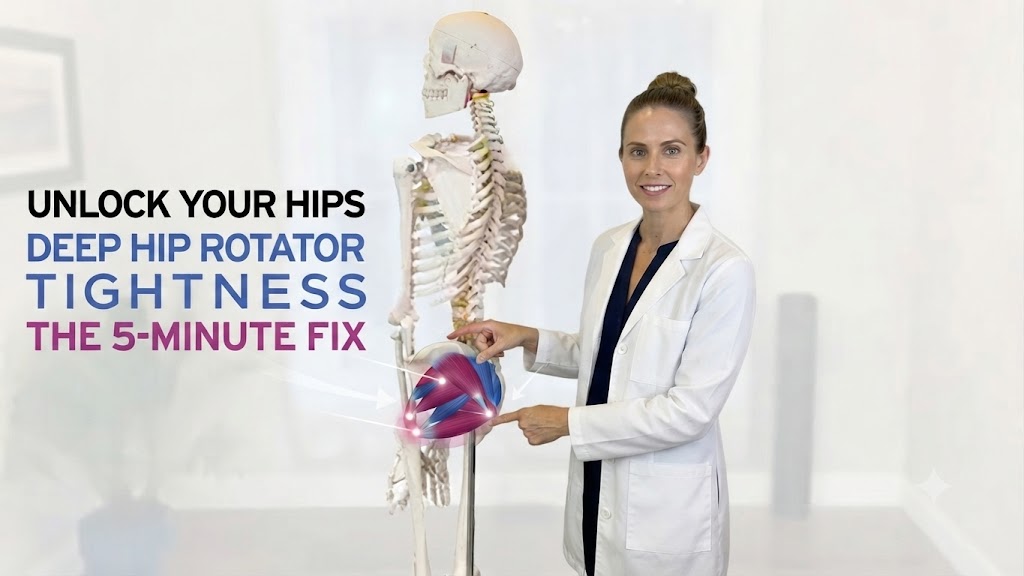
Reclaim Your Mobility Desk Damage and Fix
How to Undo Desk Damage and Fix Tight Hips in 21 Days
If your afternoon routine involves massaging a stiff lower back or wincing when you stand up from your office chair, you are far from alone. Millions of Americans experience this daily physical toll. Between remote work, long desk hours, and endless sitting, our bodies are paying a heavy price.
The underlying culprit behind this widespread discomfort isn’t a lack of overall strength it is tight hips.
Extended periods of sitting cause your hip flexors to shorten, misaligning your pelvis and placing unnatural strain on your lower back and knees. Fortunately, you can reverse this wear and tear. By understanding how sedentary habits impact your body and incorporating targeted, passive stretching into your daily routine, you can restore your range of motion and eliminate chronic aches.
Why Modern Sitting Destroys Hip Health
Consider your typical day for a moment. You sit down for breakfast, sit through your commute, sit at a desk for hours, and finally lounge on the couch before heading to bed.
In Western lifestyles, people rarely bend their knees past a 90-degree angle or drop into a full, natural squat. Over time, the muscles and tissues responsible for hip flexion, extension, adduction, abduction, and rotation are neglected.
While children naturally squat, sit on the floor, and move freely, adults develop stiff joints akin to blocks of ice due to sheer lack of use. When your hips lock up, the rest of your body is forced to compensate in several harmful ways:
- Your Posture Declines: Tight hips pull your spine out of alignment, leading to a sway-back posture or anterior pelvic tilt while standing and walking.
- Your Lower Back Absorbs the Strain: The psoas muscle connects directly from your lumbar spine to your hip flexors, meaning tight hips constantly pull on your lower back and contribute to injuries.
- Your Knees Take the Hit: Restricted hip mobility forces your knees and ankles to absorb abnormal pressure during basic movements like walking or running, often leading to joint cartilage wear.
The Limits of Traditional Workouts
When joint stiffness sets in, many people try to push through it by hitting the gym harder or going for intense runs. However, if your range of motion is already compromised, heavy lifting or fast-paced workouts often worsen movement compensations and increase the risk of injury.
True hip mobility involves a complex network of more than 20 distinct muscles and surrounding fascia. Standard dynamic stretching alone is rarely enough to fix deep-seated stiffness.
According to movement and flexibility specialists, the most effective way to lengthen tight tissue is through long-hold, passive postures paired with controlled, down-regulating breathing patterns. This specific method calms the nervous system’s stretch reflex, allowing connective tissues to safely release years of accumulated tension.
5 Effective Daily Hip Stretches to Counteract Sitting
You don’t need a complete lifestyle overhaul or hours of free time to experience relief. Committing just 15 minutes a day to targeted mobility work can transform how your lower body feels. Try adding these key movements to your weekly schedule:
1. The Low Lunge
- How to perform: Begin in a runner’s lunge with your right foot forward, knee stacked directly over your ankle, and your left knee resting gently on the ground. Slowly lift your torso, rest your hands lightly on your right thigh, and lean your hips forward slightly to feel a deep stretch in your left hip flexor.
- Hold time: Maintain the stretch for at least 30 seconds before switching sides.
2. The Out of Chair Squat Variation
- How to perform: Stand upright with your feet together and your knees and hips aligned. Gradually bend your knees and reach your arms overhead as you inhale, allowing your hips to extend backward as if lowering into an imaginary chair.
- Hold time: Hold the pose for 30 seconds while focusing on deep, steady breathing.
3. Easy Seated Cross-Legged Pose
- How to perform: Sit upright on the floor with your ankles crossed and your knees open wide. Gently lower your knees toward the floor without forcing the movement. This classic position gradually opens the hips while encouraging a straight, supported spine.
- Hold time: Hold for 30 seconds or for as long as you feel comfortable.
4. Reclining Bound Angle Pose
- How to perform: Lie flat on your back with your knees bent and feet flat on the floor. Slowly bring the soles of your feet together and let your knees drop outward to the sides. Place one hand on your chest and one on your stomach, close your eyes, and breathe deeply.
- Hold time: Relax into the pose for at least 30 seconds.
5. Pelvic Bridging
- How to perform: Lie on your back with your knees bent and your feet flat on the floor. Press through your feet to lift your pelvis and lower back off the ground, keeping your spine aligned.
- Hold time: Hold the lifted position for 5 seconds, then slowly lower down. Complete 5 to 10 repetitions.
Accelerate Your Results with a 21-Day Routine
Consistency remains the absolute key to permanent flexibility gains. For those looking for a clear, step-by-step roadmap to eliminate desk-bound stiffness, structured programs like a dedicated 21-Day Hip Opening Challenge provide an ideal framework.
Focusing on a short, daily routine allows you to:
- Deepen Your Squats: Overcome heel lifts and knee buckling to restore powerful, natural lower-body mechanics.
- Sit Comfortably on the Floor: Finally enjoy cross-legged sitting without rounded shoulders or aching knees.
- Revitalize Your Active Lifestyle: Move with greater freedom, power, and confidence during runs, workouts, or daily activities.
By investing just 15 minutes a day into passive stretching and breathwork, you build a physical foundation that rewards you with better posture, less discomfort, and long term joint health.