The Science of Amino Acids: A Comprehensive Guide to Quality and Function
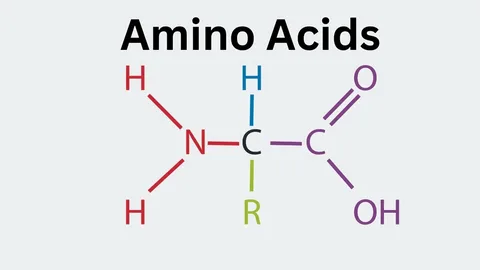
Amino acids are the fundamental building blocks of life, responsible for the synthesis of every protein, enzyme, and hormone in the human body. For researchers and health enthusiasts alike, understanding the difference between high-purity amino acids and sub-standard alternatives is the key to achieving consistent, reliable results.
The Role of Amino Acids in Physiological Function
Amino acids are not merely “protein scaffolding.” They are bioactive signaling molecules that govern critical biological pathways:
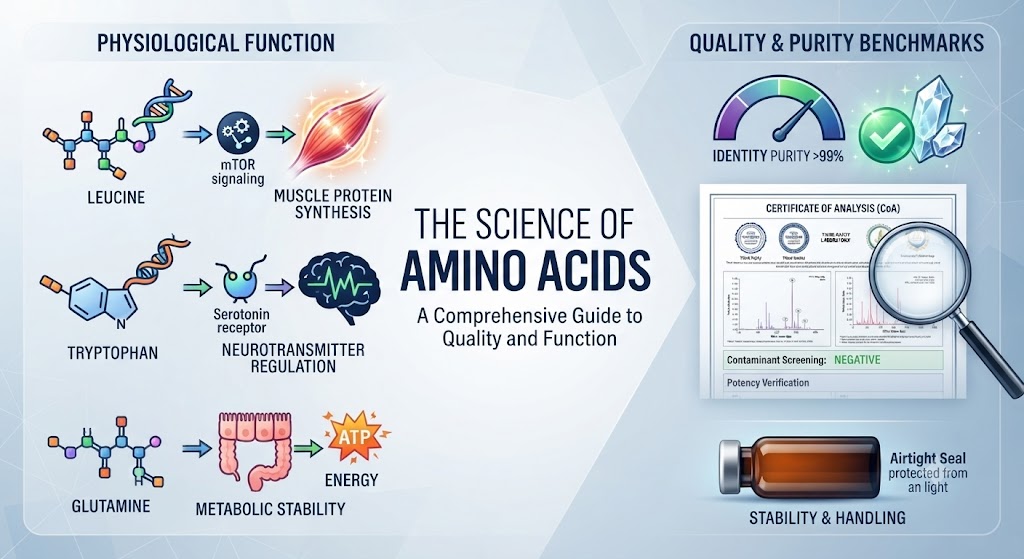
- Muscle Protein Synthesis (MPS): Driven largely by Branched Chain Amino Acids (BCAAs) like Leucine, which activates the mTOR pathway to initiate growth and repair.
- Neurotransmitter Regulation: Compounds like Tryptophan and Tyrosine serve as direct precursors to serotonin and dopamine, impacting mood, cognition, and behavior.
- Metabolic Stability: Amino acids like Alanine and Glutamine facilitate the glucose-alanine cycle and support intestinal health, acting as vital energy substrates during stress or physical exertion.
Defining “Research-Grade” Amino Acid Quality
Whether you are sourcing for professional research or personal health goals, quality must be verifiable. In the context of amino acids, “purity” is not just a marketing term; it is a clinical requirement.
1. The Purity Benchmark (99%+ Identity)
High-purity amino acids should be synthesized and purified to exceed 99% identity. Impurities (such as residual heavy metals, solvents, or sub-standard amino profiles) can interfere with cellular signaling and lead to unpredictable experimental or physiological outcomes.
2. The Certificate of Analysis (CoA)
A reliable source will provide a CoA for every batch. This document, derived from independent, third-party laboratory testing, verifies:
- Identity Purity: Confirms the chemical structure is precisely what is claimed.
- Potency/Concentration: Ensures that the dosage is accurate down to the microgram.
- Contaminant Screening: Verifies the absence of E. Coli, heavy metals, and other harmful substances.
3. Stability and Handling
Amino acids are often provided in crystalline or powder form. While generally stable, they are sensitive to moisture and light. Proper storage in a cool, dry, and airtight environment is essential to prevent degradation (oxidization), which can alter the compound’s effectiveness.
Pros and Cons of Amino Acid Supplementation
| Feature | Pros | Cons/Considerations |
| Biochemical Precision | High specificity for targeting MPS and neurotransmitter pathways. | Requires specific timing (e.g., pre/post-workout) for maximal effect. |
| Verified Purity | Independent HPLC/Mass Spec testing ensures reproducible results. | Higher purity compounds typically command a premium price. |
| Metabolic Impact | Supports satiety, recovery, and overall metabolic health. | Can cause digestive discomfort if used in excessive dosages or if lactose-based. |
| Versatility | Adaptable for various research and wellness applications. | Must be sourced from transparent, U.S.-verified suppliers. |
Operational Best Practices for Usage
To maintain the integrity of your amino acid profile:
- Storage: Keep in airtight containers. If using bulk powders, avoid introducing moisture into the container, as this can lead to clumping and degradation.
- Synergy: Recognize that amino acids function in groups. As noted in research, individual amino acids (like Leucine) often require the presence of the other eight essential amino acids to successfully initiate protein synthesis.
- Transparency: Avoid “Proprietary Blends.” Always select products that provide a breakdown of the specific dosage for each amino acid included.
Conclusion
The utility of amino acids in both clinical research and daily health management is profound. However, their efficacy is entirely dependent on the quality of the supply. By demanding identity purity, independent verification, and full ingredient transparency, you ensure that the amino acids you utilize are performing the physiological functions they were designed to support. Ultimately, investing time in rigorous sourcing safeguards your long-term research integrity, optimizes health outcomes, and guarantees consistent, uncompromised success across every single application. Prioritizing certified, high grade compounds empowers you to achieve maximum biological efficiency while completely eliminating the risks associated with unverified, sub-standard alternatives in your daily regimen.